Democratic countries offer certainty about the political process – common knowledge – but uncertainty about outcomes, for example: who should lead, or what the issues are.
But the common political knowledge of the US has come under extreme pressure by the Biden age-panic, which has created an expectation that the presidential nomination could have a new and unprecedented outcome.
Depending on the angle, the voice, and time of day, it appears to be a kind of political patricide by the Democrats, helped by feverish, and highly speculative reporting.
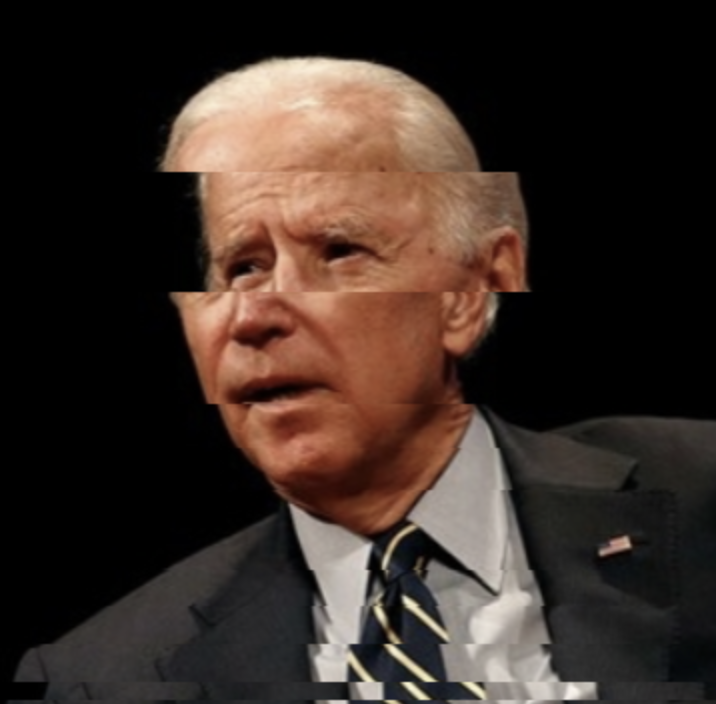
But I have seen something remotely similar, the feverish, unchecked and unrestrained reporting on Hillary Clinton’s emails in 2016.
While speculation over “her emails” existed for years, Russian hackers, and their cut outs, including Wikileaks and Guccifer 2.0 were used to convert the issue into a blunt instrument to attack the legitimacy of her campaign.
In the process, in 2016 the common knowledge of the process of the Democratic nomination itself became the ultimate target of attack. What was Clinton hiding? How legitimate was the entire process? What role did the “Deep State” have?
Faith in the system of democracy came into the crosshairs – and not because of its routine and well-known shortcomings, but because of a directed and accelerated acid-bath of reporting.
Common political knowledge, as defined by Bruce Schneier and political scientist Henry Farrell, is “the shared set of social beliefs about how the system works, who the actors are, and so on, which helps to order politics” and contested political knowledge, “the knowledge that is contestable, where people may disagree.”
And so we are here again. The Biden White House has to fend off the second opinions of all Democrats, all Republicans, Never-Trumpers who, it turns out, have strong feelings on advisability of a second term for Biden.
The Biden campaign also must face down the global opinions of millions (or maybe a billion) onlookers who cannot vote in the election, but who can certainly shift search terms and trending terms on the internet – which itself can shape the narrative.
Being atomised, the narrative is personalized.
In the old text-based world, the media would have had to discuss Biden’s policy and look at the reform aimed at making a kinder, gentler economy and society for the middle and lower class.
Instead, in the viral world, the experience of the man on the debate stage, the story quickly becomes about Biden’s personality. He is “selfish, hubristic” as one journalist describes it – because everyone can see he is old, and yet he clings to power, and – unlike the Inflation Reduction Act – everyone can see and experience Biden’s age at a distance.
The media, feeling they have been bullied by the Biden White House over their reporting on his age and history (long history) of gaffes, sprung to life after the debate. Following the logic of social media, this event has set off a viral circular firing squad for the Democrats, in which everyone must take a position on whether Biden should stand down.
The issue of aging of course is highly relatable – everyone has a personal experience, everyone view to share. This is how something goes viral online.
The politics of Biden’s speech ability also reflect the media environment. Compare Biden’s speech to the infamous eloquence of George W Bush, or his dad George H W Bush. But in those terms the networked outrage didn’t exist in the same way. The media could gatekeep the reaction to the Bush duo’s mangled speech.
Not today. Instead, the outlets profit as any other node from such user engagement. The media, in this analysis, is an another node in a much larger network. Like 4Chan, but with mods being graduates of the Columbia School of Journalism.
The mood-flip by the media is driven in large part by the Democrats’ response to the debate. This unleashed a flood of reporting about concerns and frustration for how the Biden campaign has appeared to quash reports about concerns for the president’s age. Like so much in this era, it’s viral.
Revolutions on the internet rise quickly but sometimes don’t know where to go. Think Occupy Wall Street, or the Arab Spring. But this time, it’s being led by reporters, who perhaps misread the outrage they’re hearing from mid-America as a sign that they are effectively doing their job.
The broader worry is not the disruptive effect it can have on the Biden White House but on democracy itself. If this is just an accidental confluence of events and perceptions, it poses a bigger question about the confidence in democracy in the digital age.
In fact, it is yet another moment to consider how compatible democracy is with the Viral Age. Or, how can faith in the system be maintained, when the narrative shifts toward a direct attack on the integrity of the process?
We will soon find out.

 Cold War Daily
Leave a comment